Triple Crown Roofing: Prepare for Hurricane Season with Metal Roofing
How Central Florida’s Relentless Summer Downpours Can Expose Small Roofing Problems Before They Become Expensive Leaks

Florida homeowners hear a lot about preparing their roofs for hurricanes.
But sometimes, it isn't one major storm that puts a roof to the test.
Sometimes it's Monday's downpour.
Then Tuesday's.
Then Wednesday's.
And by the time the weekend arrives, your roof has spent most of the week getting soaked, heating up under the Florida sun, absorbing humidity, partially drying out, and getting soaked all over again.
No hurricane required.
For homeowners throughout Zephyrhills and Central Florida, long stretches of afternoon thunderstorms and heavy downpours create a different kind of challenge for a roofing system—one that can be easy to overlook because there may never be a single dramatic moment when something obviously goes wrong.
Instead, the problem can develop little by little.
One Heavy Rainstorm and Weeks of Rain Aren't the Same Thing
A properly installed and maintained roofing system is designed to handle rain.
That's its job.
But there's an important difference between handling an occasional storm and going through repeated cycles of heavy rain, intense heat, high humidity, and more rain.
Think about what your roof experiences during a typical stretch of Florida summer weather.
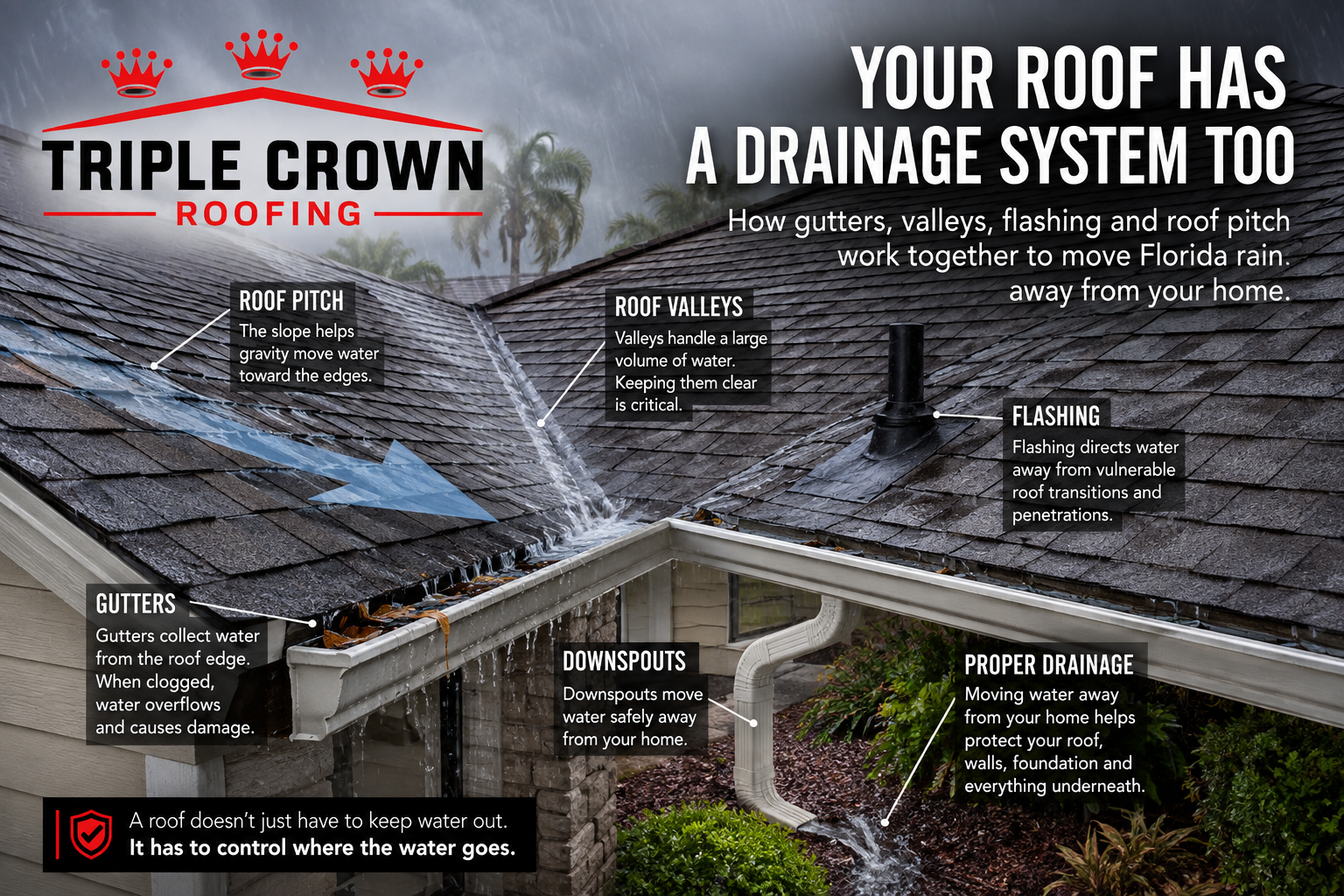
Heavy rain pounds the shingles and sends thousands of gallons of water toward the valleys, flashing, gutters, and roof edges.
The storm passes.
The sun comes back out, and roof temperatures climb.
Moisture begins evaporating.
Humidity remains high.
Then another thunderstorm develops and the entire process starts again.
Day after day, your roof keeps going through the same cycle.
If every component of the roofing system is performing correctly, that's usually not a problem.
But if there's already one small weakness somewhere in the system?
Repeated rain has plenty of opportunities to find it.
Water Doesn't Need a Big Opening
When homeowners imagine a roof leak, they often picture a missing shingle or an obvious hole in the roof.
Most water intrusion isn't that dramatic.
Water may exploit something as small as:
- deteriorated sealant around flashing
- a slightly lifted or damaged shingle
- an exposed or backed-out roofing nail
- worn flashing around a vent or pipe
- a vulnerable roof valley
- deteriorated boots around plumbing penetrations
- improperly draining gutters
- aging underlayment beneath the shingles
During one quick storm, a small vulnerability may not allow enough water into the roofing system to create an obvious symptom inside the home.
But repeated downpours change the equation.
The opening doesn't necessarily have to get dramatically larger.
The water simply has to keep getting another opportunity.
The Most Important Part of Your Roof May Be the Part You Can't See
Your shingles are only the outermost layer of a much larger roofing system.
Beneath them are components designed to help manage water when it gets beyond the primary roof covering.
One of the most important is the underlayment.
Underlayment provides an additional layer of protection between the shingles and the roof decking. If shingles become damaged or water gets underneath them, properly functioning underlayment can provide another line of defense.
But roofing materials don't last forever.
As a roof ages, heat, moisture, previous repairs, installation issues, and years of Florida weather can affect different components at different rates.
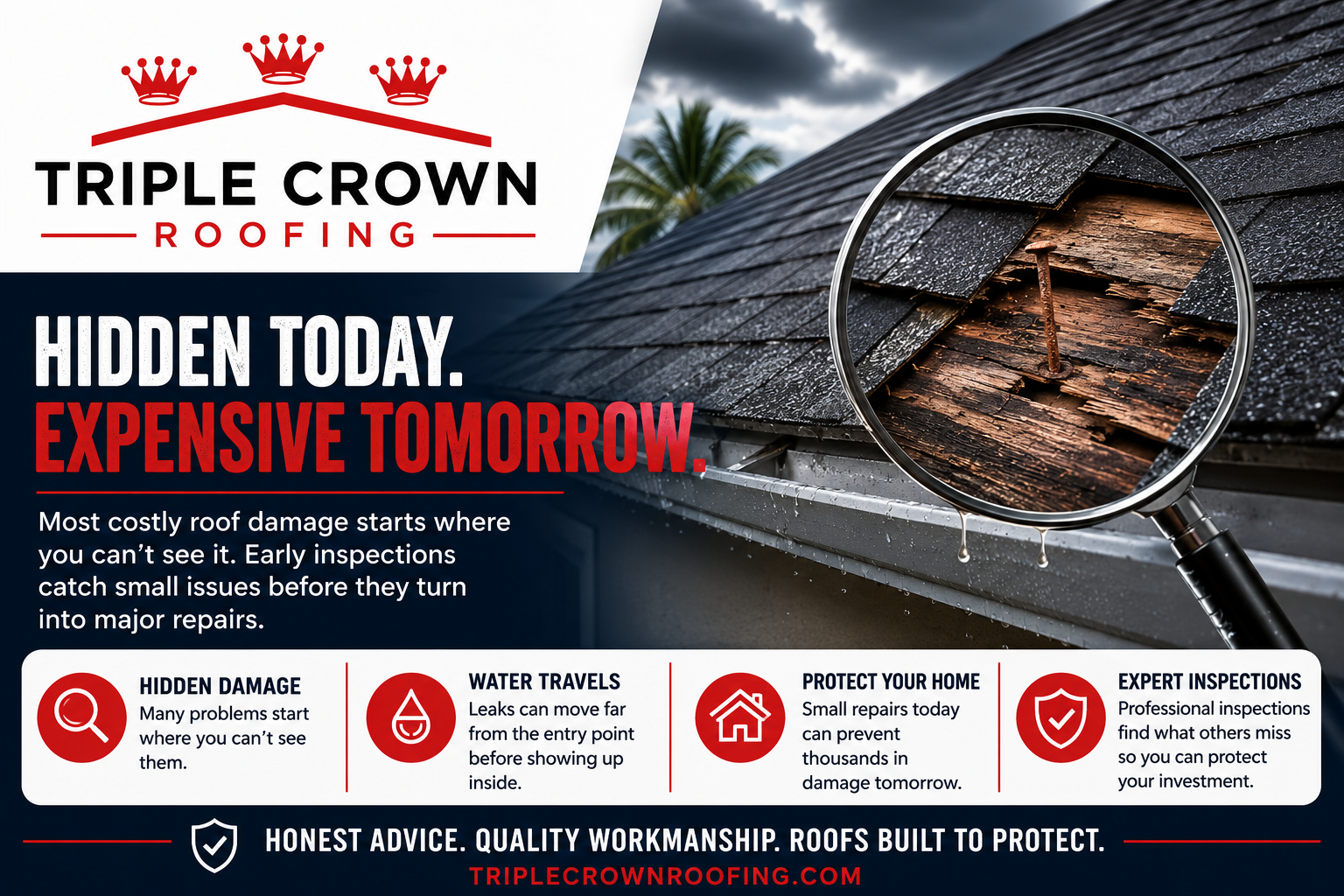
That's one reason a roof can look relatively normal from the driveway while problems are developing underneath.
Roof Valleys Take an Incredible Amount of Water
If there's one part of a roof worth paying attention to during repeated heavy rainfall, it's the valleys.
Roof valleys are where two roof slopes meet. Their job is to collect runoff from both sections and direct it toward the edge of the roof.
During a Florida downpour, an enormous amount of water can move through a relatively narrow area.
That's perfectly normal—provided the valley was installed correctly and remains in good condition.
But because valleys handle so much concentrated runoff, problems with shingles, flashing, debris, or installation can make them particularly vulnerable areas.
A homeowner might look at the roof and see every shingle still sitting in place.
A roofer may look at that same roof and pay very close attention to where all that water is actually traveling.
That's an important distinction.
Flashing Is Where Roofing Meets Reality
A roof isn't one perfectly uninterrupted surface.
There are vents.
Pipes.
Chimneys.
Walls.
Skylights.
Roof transitions.
And every time something interrupts the roof surface, water has to be properly redirected around it.
That's the job of flashing.
Flashing is one of those roofing components most homeowners rarely think about until there's a problem.
Repeated heavy rain can expose weaknesses around these transitions because water continually flows across the same areas.
A small flashing problem may remain unnoticed during dry weather.
Several days of hard Florida rain can tell a very different story.
The Rain Stops. The Moisture Problem May Not.
Here's something many homeowners don't realize:
Water doesn't have to drip from the ceiling for moisture to be causing trouble.
A small amount of water entering a roofing system may wet roof decking, insulation, or other materials without immediately producing a visible ceiling stain.
Then the weather becomes hot and humid.
Those materials begin drying—but perhaps not completely.
Another storm arrives.
They get wet again.
This repeated wetting and incomplete drying is one reason prolonged rainy periods deserve attention, especially on older roofs or roofs with existing vulnerabilities.
Over time, persistent moisture can contribute to deterioration of wood components and create conditions favorable to mold or mildew.
And because everything is happening above the ceiling, homeowners may have no idea it's occurring.
Your Attic Can Tell a Story Your Ceiling Hasn't Told Yet
After extended periods of rain, one of the most revealing areas of a home can be the attic.
Long before water creates an obvious stain on the living-room ceiling, there may be signs above it.
A roofing professional may look for things such as darkened decking, moisture staining, damp insulation, corrosion around fasteners, signs of previous water travel, or areas that appear different from the surrounding wood.
That's important because water doesn't always travel straight down.
It can follow rafters, decking, nails, pipes, and other surfaces before finally appearing somewhere inside the house.
That means the location of a ceiling stain isn't necessarily the location where the water entered the roof.
Watch What Happens During the Rain, Too
Your roof isn't the only system responsible for moving water away from your home.
Gutters and downspouts matter.
During one of Central Florida's heavy afternoon downpours, take a look outside from a safe location.
Is water flowing through the gutters and downspouts?
Or is it pouring over the sides?
Are there areas where water seems to collect?
Is runoff consistently dumping next to the foundation?
Are leaves or debris preventing water from moving properly?
A roof may shed water perfectly, but that water still needs somewhere to go.
The heavier the rain, the more obvious drainage problems can become.
Don't Climb Onto a Wet Roof to Investigate
This is worth saying clearly.
If you've had several days of heavy rain and you're wondering whether your roof has a problem, don't climb onto a wet roof to check it yourself.
Wet roofing materials can be extremely slippery, and Florida thunderstorms can develop quickly.
There are plenty of things homeowners can safely look for from the ground or inside the home:
- new ceiling discoloration
- bubbling or peeling paint
- damp or musty odors
- unusual attic moisture
- water around vents or exhaust openings
- overflowing gutters
- debris accumulating in valleys or gutters
- shingles or roofing material visible on the ground
If something doesn't look right, that's when it makes sense to have the roof professionally evaluated.
"But My Roof Isn't Leaking."
Good.
That's exactly how you want to keep it.
The best time to discover a roofing vulnerability is usually before water is dripping into your home.
A professional roof inspection isn't just about finding active leaks. It's about identifying conditions that could become leaks.
After an extended stretch of heavy rainfall, an inspection can be especially valuable for an older roof, a roof with previous repairs, or a home where you've noticed something unusual.
Sometimes the inspection confirms that everything is performing exactly as it should.
That's valuable information too.
Florida Roofs Don't Only Prove Themselves During Hurricanes
Hurricanes understandably get most of the attention.
They're dramatic.
They're powerful.
And they can cause catastrophic roof damage.
But your roof's real job happens during the other 360-plus days of the year.
It's the blazing sun.
The humidity.
The afternoon thunderstorms.
The sudden temperature changes.
The wind-driven rain.
And sometimes, it's simply day after day after day of water.
A Florida roof doesn't have to survive a named storm to be working hard.
Sometimes August is enough.
Let Triple Crown Roofing Take a Look
If the recent stretch of heavy rain around Zephyrhills and Central Florida has you wondering how your roof is holding up, you don't have to wait for a ceiling stain to find out.
Triple Crown Roofing can inspect your roofing system for signs of damage, wear, vulnerable flashing, drainage concerns, and other potential problems that may become more serious if they're ignored.
Your roof doesn't need to be leaking to deserve attention.
In fact, the best roofing problems to find are the ones you catch before they ever make it inside your home.
Triple Crown Roofing
39246 South Avenue
Zephyrhills, Florida 33542
Call:
813-715-4617
Protecting Central Florida homes through the everyday storms—not just the named ones.