Triple Crown Roofing: Prepare for Hurricane Season with Metal Roofing
Why Central Florida’s Daily Cycle of Extreme Heat, Sudden Downpours, and Relentless Humidity Can Quietly Expose Weaknesses in Your Roofing System
There is a moment that happens across Central Florida almost every summer afternoon.
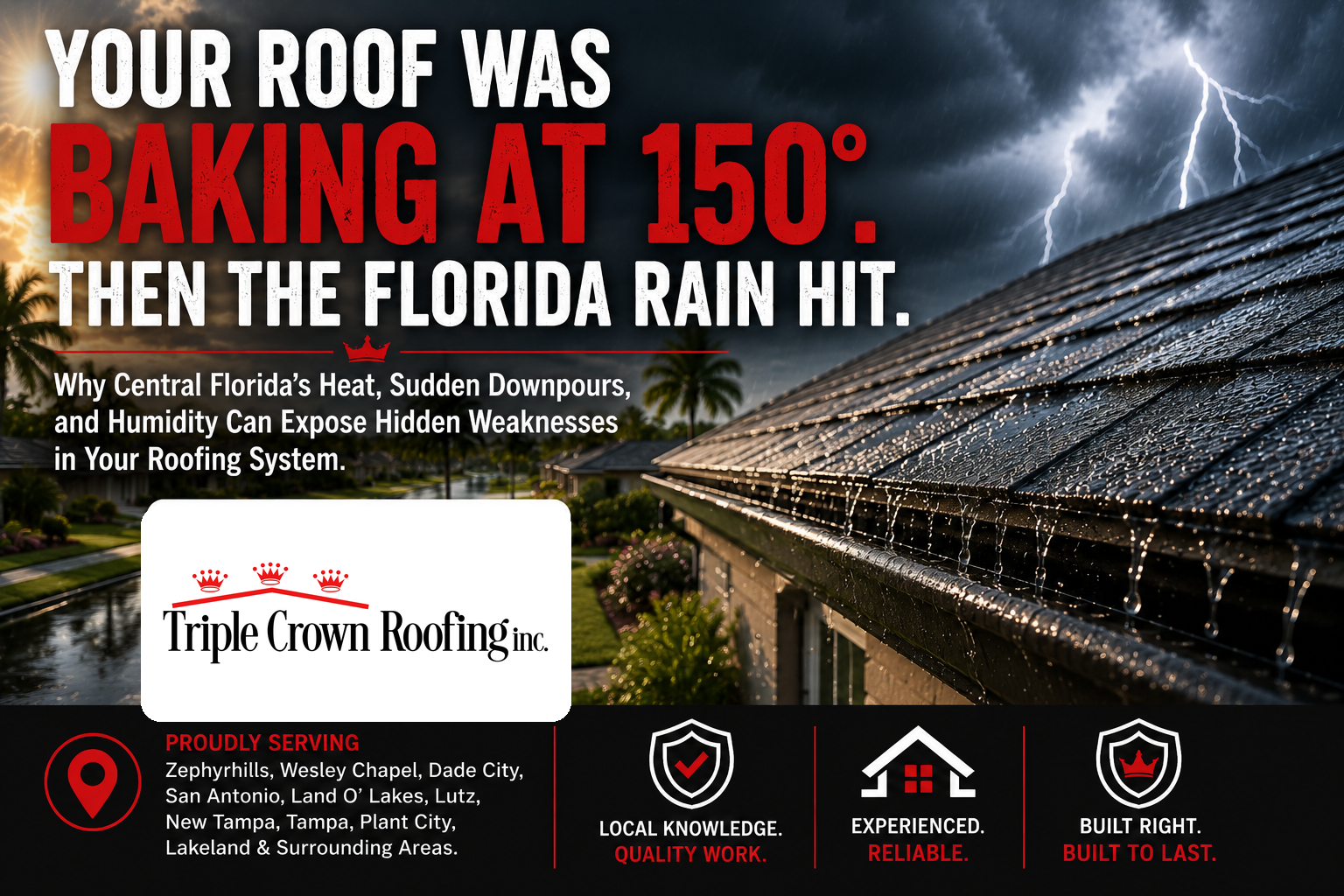
For hours, the sun beats down on your roof.
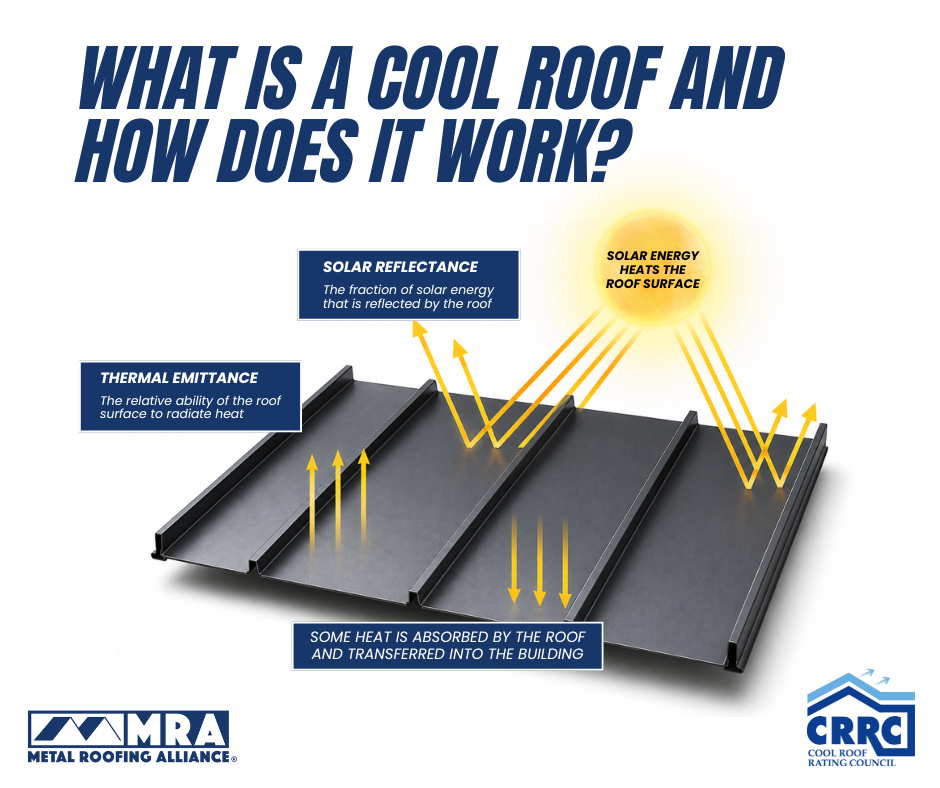
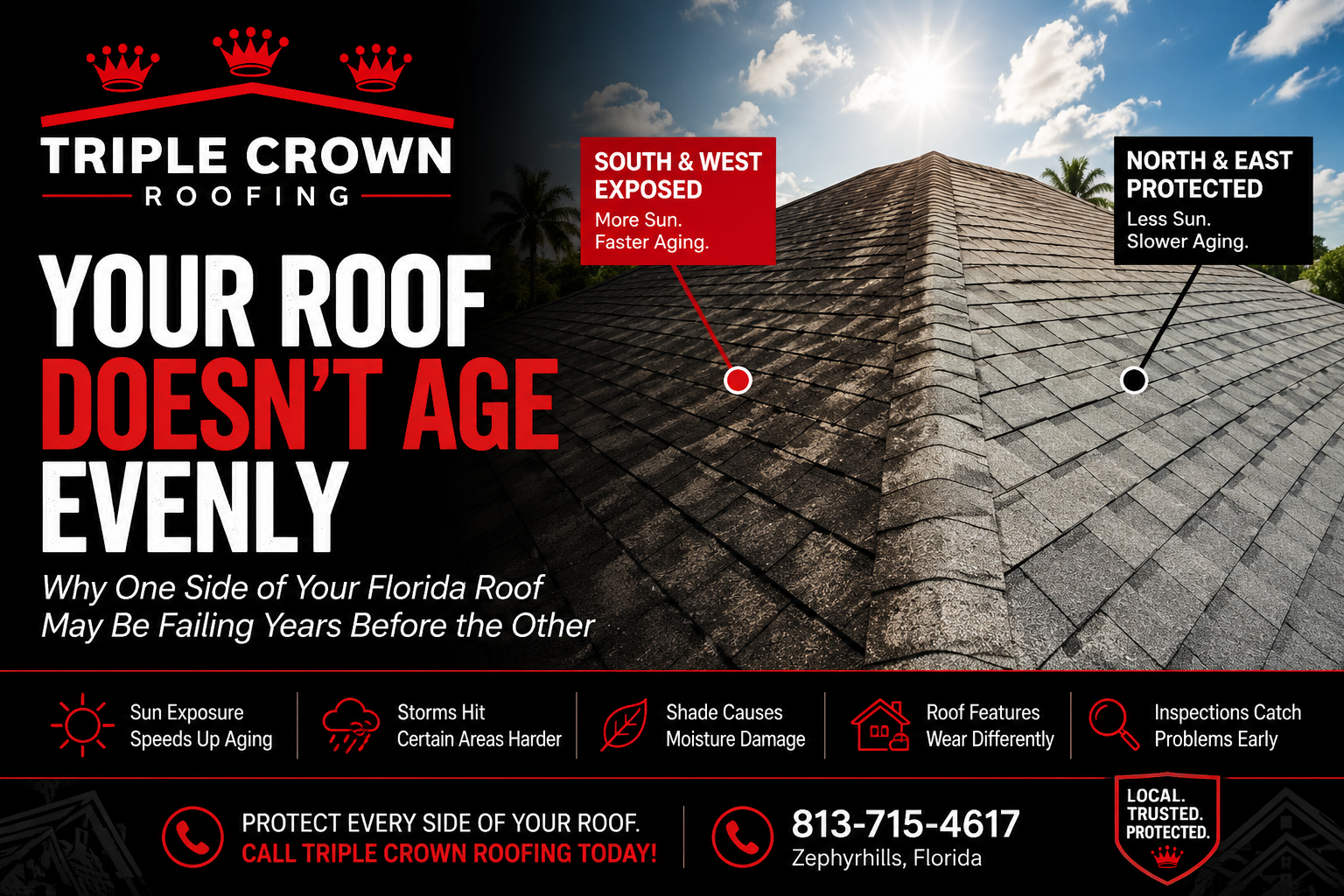
The air temperature may be in the 90s, but the surface of a dark roofing system can become dramatically hotter. Shingles, flashing, vents, exposed metal components, sealants, and every roof penetration spend the day absorbing intense solar energy.
Then the sky changes.
Clouds build. Thunder rolls. The wind picks up.
And suddenly, a roof that has been baking under the Florida sun gets hammered by cooler rain.
Most homeowners think of that rain as relief.
Your roof may experience it as something very different.
The Florida Summer Cycle Most Homeowners Never Think About
Central Florida roofs do not simply deal with “hot weather” or “rainy weather.”
They deal with rapid changes.
A typical summer day can bring hours of intense sunlight, high humidity, sudden cloud cover, gusty winds, heavy rainfall, standing moisture, and then another round of heat.
That cycle can repeat again and again throughout the season.
Roofing materials naturally expand as they heat and contract as temperatures change. A healthy, properly installed roofing system is designed to handle normal movement. But age, previous storm damage, installation problems, worn sealants, loose flashing, lifted shingles, and deteriorating components can turn repeated summer stress into a much bigger concern.
The problem is that you may not see it happening from the ground.
Heat Does Not Have to “Melt” a Roof to Stress It
When people hear about extreme roof temperatures, they sometimes imagine shingles visibly melting or curling overnight.
That is usually not how roofing problems develop.
The more common concern is cumulative stress.
Day after day, intense heat can challenge aging materials and expose areas that were already beginning to weaken. Sealants may become less reliable.
Older shingles may become more brittle over time. Flashing details may become increasingly vulnerable. Small installation flaws that caused no obvious problem during mild weather may become much more important during a punishing Florida summer.
This is especially relevant on roofs that are already several years old or have been through multiple storm seasons.
Your roof remembers every season, even when you do not see the evidence yet.
Then the Afternoon Downpour Arrives
Now add water.
A sudden Central Florida thunderstorm can dump a tremendous amount of rain in a short period of time. Wind can push that water across the roof from directions it does not normally travel during a gentle shower.
That matters because water does not need a giant hole to create a problem.
It looks for weakness.
A small flashing issue.
A compromised pipe boot.
A lifted shingle edge.
A vulnerable roof-to-wall connection.
An aging seal around a penetration.
A previous repair that is beginning to fail.
A section of decking already weakened by moisture.
The storm does not necessarily create every problem. Sometimes, it simply finds the one that was already there.
Why “My Roof Doesn’t Leak” Can Be False Confidence
One of the biggest misconceptions in roofing is that no visible ceiling stain means no roof problem.
Unfortunately, water does not always travel straight down.
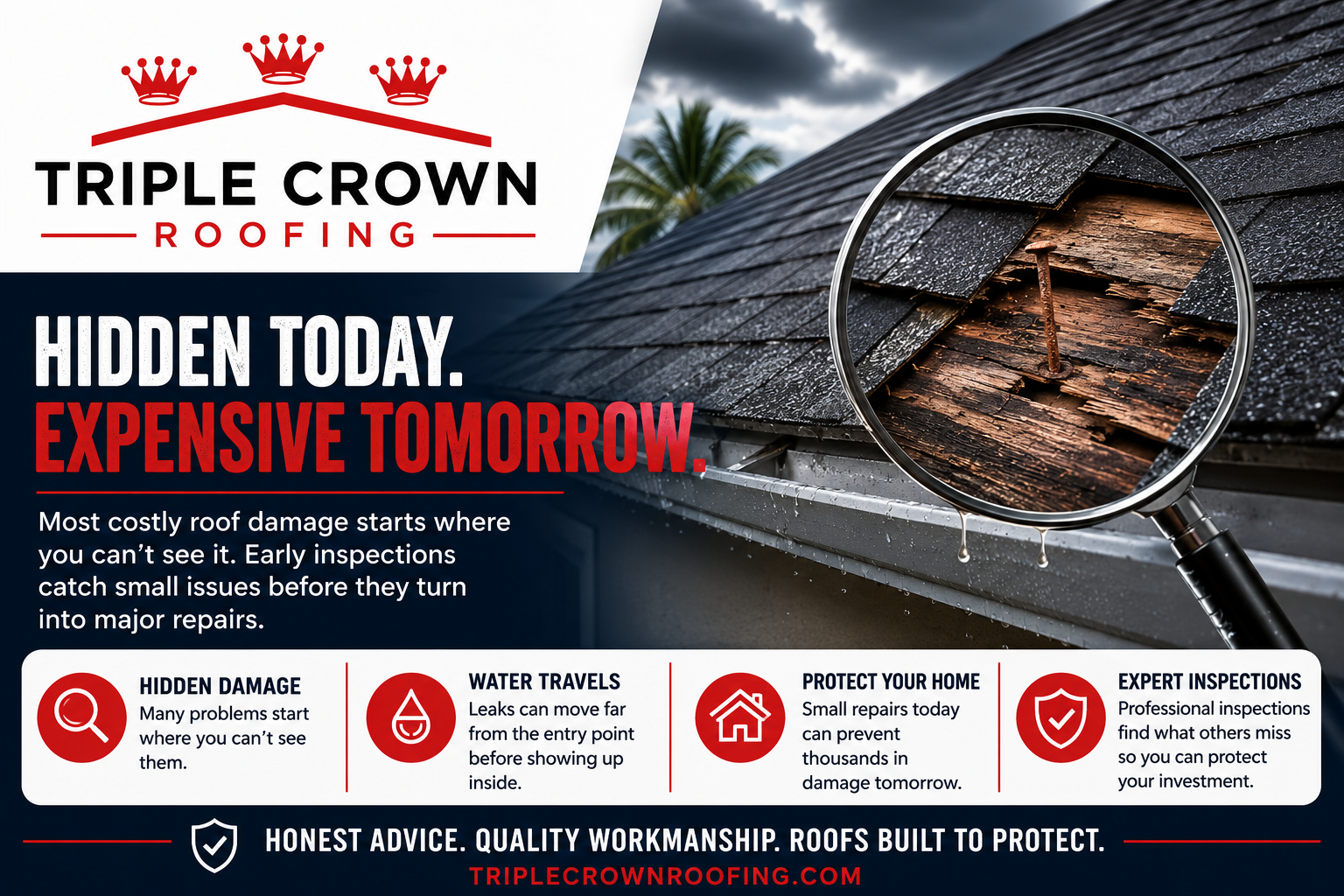
Moisture can move along decking, framing, fasteners, insulation, and other building materials before appearing inside the living space. In some cases, a small intrusion may remain hidden long enough to affect wood, insulation, or interior materials before a homeowner notices anything unusual.
By the time a brown stain appears on the ceiling, the first sign you noticed may not have been the first day the problem existed.
That is why roof inspections can be especially valuable after periods of extreme heat and repeated summer storms.
The Most Vulnerable Parts of Your Roof May Not Be the Shingles
Homeowners naturally focus on shingles because they cover most of the visible roof.
But many roofing problems begin around transitions and penetrations.
Areas worth paying attention to include:
- Roof valleys where large volumes of water are concentrated
- Flashing around walls and roof transitions
- Plumbing vent penetrations
- Roof vents
- Chimney flashing
- Skylight areas
- Ridge components
- Eaves and edges
- Previous repair locations
- Areas where debris traps moisture
- Sections affected by overhanging tree limbs
A roof can look generally “fine” from the driveway while one small vulnerable area is quietly allowing moisture where it does not belong.
Florida Humidity Makes the Story Even More Complicated
The rain may stop in twenty minutes.
The moisture challenge does not.
Central Florida’s humidity can make drying conditions difficult, especially in shaded areas, around trapped debris, or where ventilation is poor. If moisture reaches materials beneath the visible roofing surface, the homeowner may have no immediate clue.
This is one reason roofing should be viewed as a complete system rather than a decorative layer of shingles.
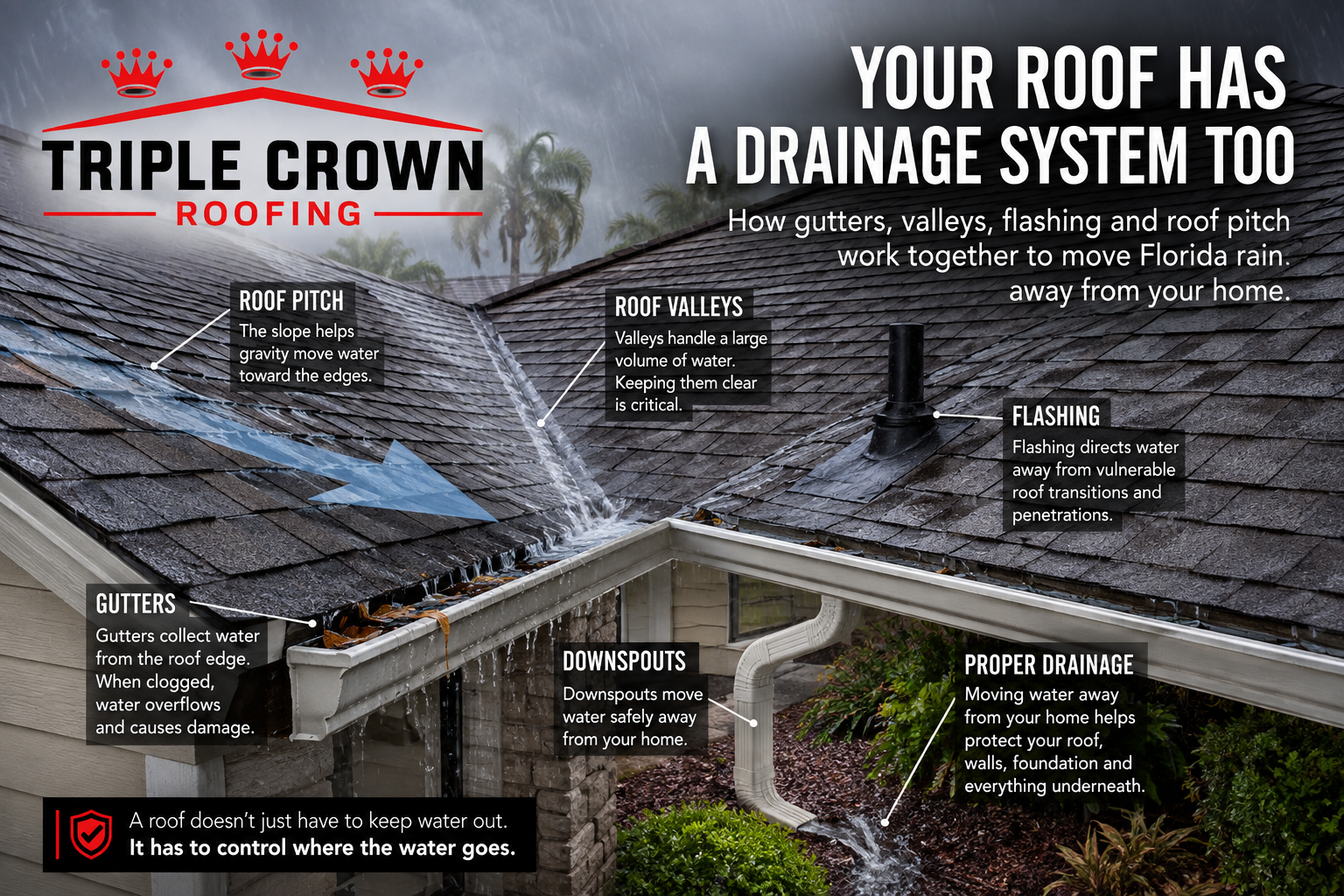
Your roof works together with decking, underlayment, flashing, ventilation, drainage, penetrations, and structural components. One weak point can affect much more than the small area where the problem began.
A Small Summer Weakness Can Become a Hurricane-Season Problem
This is where timing matters.
A roof that is already struggling with a loose component, compromised flashing, an aging penetration, or a small moisture issue may face much greater stress when stronger weather arrives.
Central Florida homeowners know how quickly summer conditions can change. A normal sunny morning can become a violent afternoon thunderstorm. Tropical weather can develop. Wind-driven rain can expose weaknesses that ordinary rainfall never reached.
Finding a concern early does not guarantee that every repair will be minor.
But ignoring a concern rarely makes it less expensive.
Signs Your Roof May Be Asking for Attention
You do not need to climb onto the roof to notice possible warning signs.
From a safe location, homeowners may want to watch for:
- Shingles that appear lifted, shifted, cracked, or missing
- Granules collecting near downspouts
- Water stains on ceilings or walls
- Musty odors in attic spaces
- Damp insulation
- Peeling paint near ceiling lines
- Debris collecting in roof valleys
- Sagging or unusual roofline changes
- Visible flashing concerns
- Recurring leaks that appear only during wind-driven rain
Even subtle changes can be worth investigating, particularly after weeks of intense heat and repeated storms.
Serving Homeowners Across Central Florida
Triple Crown Roofing proudly serves homeowners throughout Zephyrhills, Wesley Chapel, Dade City, San Antonio, Land O’ Lakes, Lutz, New Tampa, Tampa, Plant City, Lakeland, and surrounding Central Florida communities.
Every area has its own mix of roof ages, neighborhood construction styles, tree coverage, storm exposure, and drainage challenges. But one thing connects homeowners across the region: Florida roofs endure conditions that can be punishing even on days when there is no named storm in sight.
Whether your home is in Pasco County, Hillsborough County, or a nearby Central Florida community, your roof spends the summer absorbing heat, shedding heavy rain, resisting wind, and protecting everything underneath it.
That is a demanding job.
Your Roof Does Not Need a Hurricane to Be Under Stress
Some of the most important roofing problems begin quietly.
Not with a tree crashing through the house.
Not with shingles scattered across the yard.
Not with a dramatic waterfall pouring through the ceiling.
Sometimes it starts with one vulnerable area.
One aging seal.
One flashing detail.
One lifted edge.
One place where repeated heat, rain, humidity, and time finally expose a weakness.
At Triple Crown Roofing, we believe homeowners deserve clear answers about what is happening above their heads. If you are concerned about the condition of your roof, have noticed a change after recent storms, or simply want to better understand how your roofing system is holding up through another brutal Central Florida summer, now is a smart time to have it evaluated.
Because in Florida, the storm that reveals the problem is not always the storm that caused it.
Triple Crown Roofing
Central Florida Roofing Experience. Local Knowledge. Straight Answers.