Triple Crown Roofing: Prepare for Hurricane Season with Metal Roofing
A Simple Step-by-Step Guide to Help Protect Your Home Before Storm Season Arrives
In Florida, hurricane season is not a matter of if—it's a matter of when. While many homeowners stock up on water, batteries, and emergency supplies, one of the most important parts of the home is often overlooked until a storm is already on the radar: the roof.
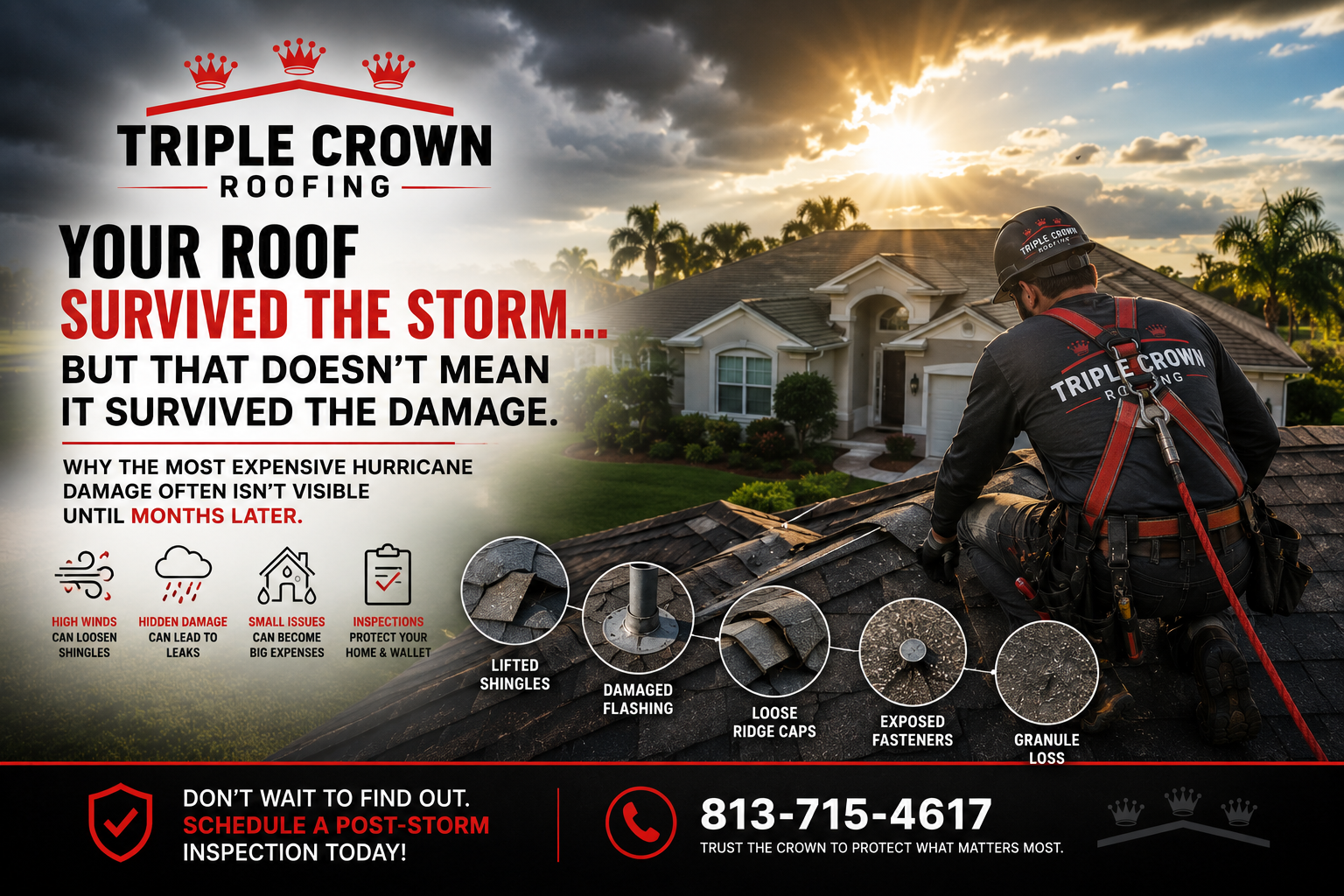
Your roof is your home's first line of defense against high winds, heavy rain, flying debris, and severe weather. Unfortunately, small roofing issues that seem harmless today can quickly become major problems during a hurricane.
The good news? There are several things homeowners can do before storm season begins to identify potential concerns and help reduce the risk of costly damage.
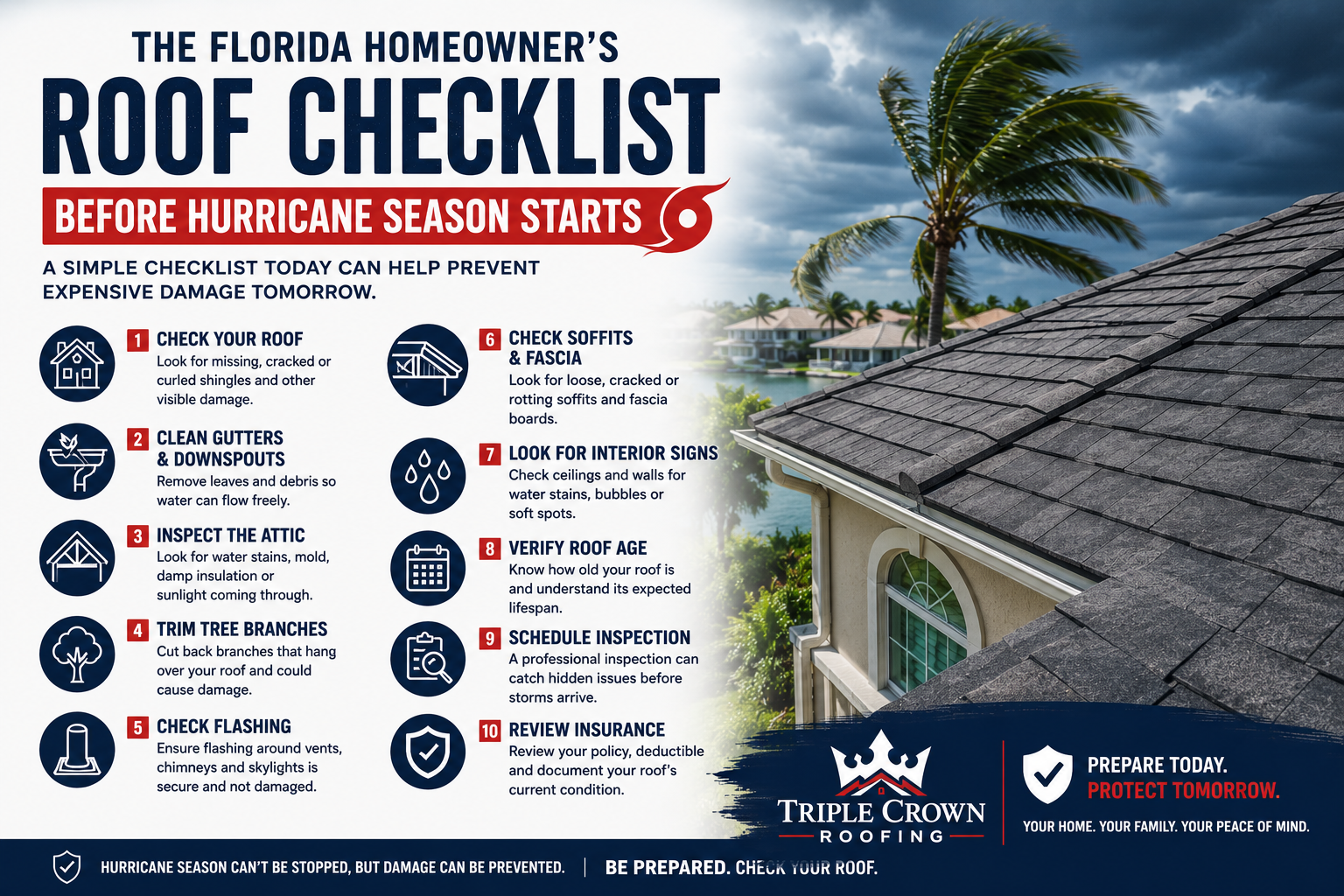
Here is a practical Florida homeowner's roof checklist to help you prepare.
1. Walk Around Your Home and Look for Visible Roof Damage
You don't need to climb onto the roof to spot many common warning signs.
Walk around your property and look for:
- Missing shingles
- Curled or lifted shingles
- Cracked or damaged roofing materials
- Sagging roof sections
- Dark streaks or discoloration
- Loose flashing around chimneys, vents, or valleys
Even minor damage can become a major entry point for wind and water during a storm.
If something looks questionable, it's worth having a professional inspection performed before hurricane season reaches its peak.
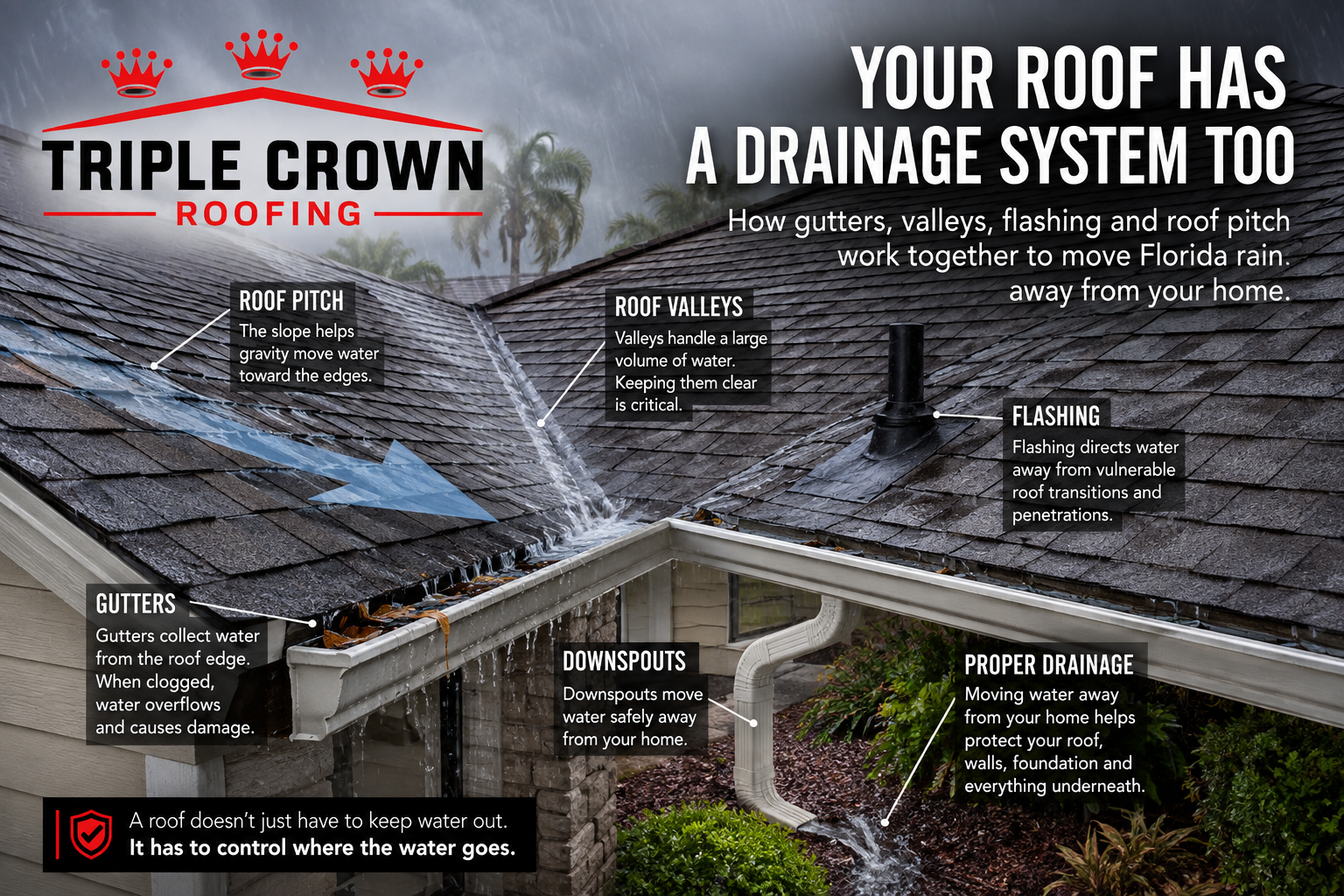
2. Check Your Gutters and Downspouts
Florida storms often bring intense rainfall in a short amount of time.
Clogged gutters can cause water to:
- Overflow onto fascia boards
- Damage soffits
- Pool around your foundation
- Back up under roofing materials
Make sure gutters are free of:
- Leaves
- Pine needles
- Roof granules
- Debris from nearby trees
Verify that downspouts direct water away from the home's foundation.
3. Inspect the Attic
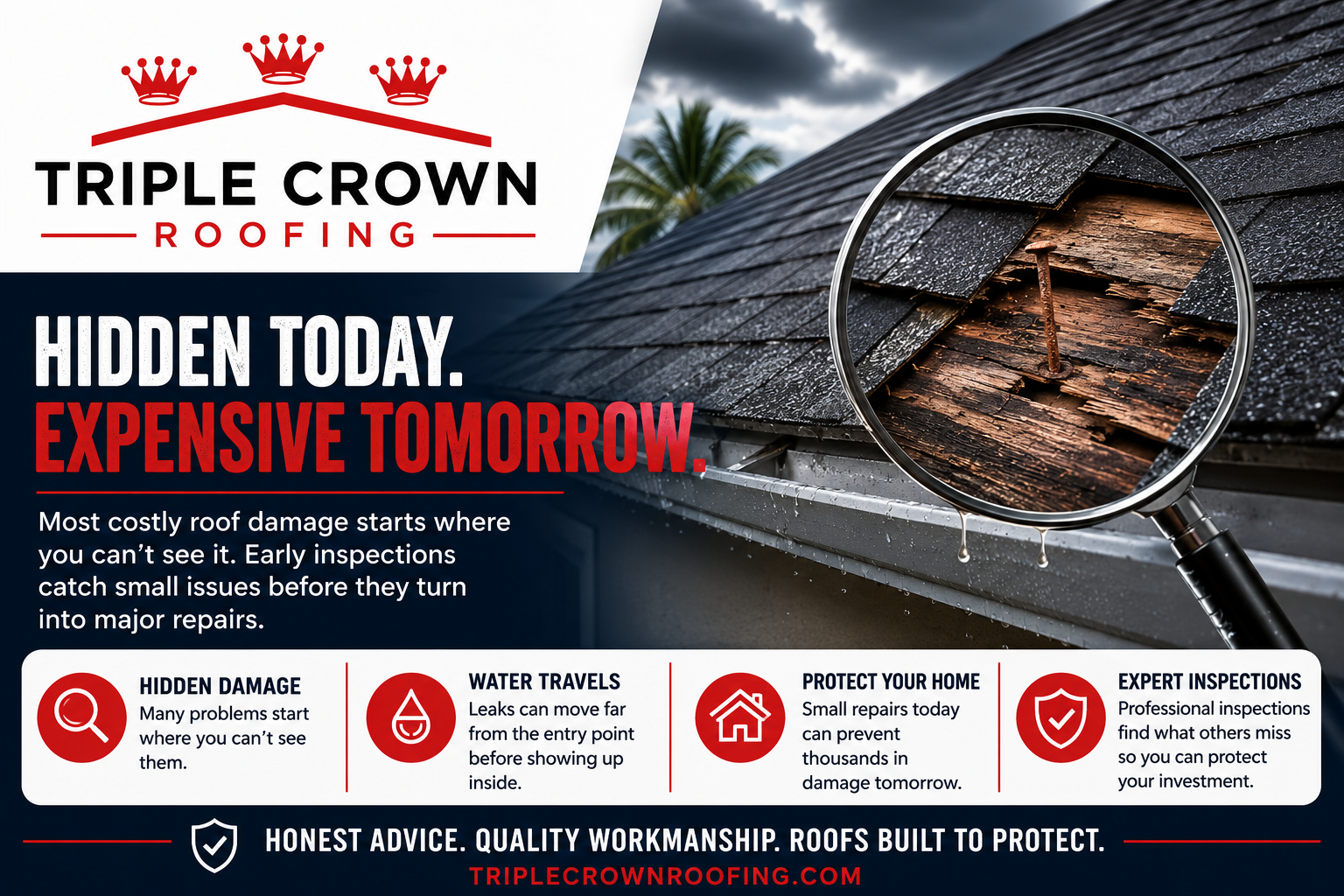
Many roofing problems reveal themselves inside the home before they become visible outside.
Take a flashlight into the attic and look for:
- Water stains
- Damp insulation
- Mold or mildew growth
- Softwood decking
- Sunlight shining through the roof boards
Any of these signs may indicate existing vulnerabilities in the roof that could worsen during severe weather.
4. Trim Overhanging Tree Branches
Trees provide valuable shade in Florida, but branches hanging over your roof can become dangerous projectiles during high winds.
Remove branches that:
- Touch the roof
- Hang directly over the home
- Show signs of disease or weakness
Reducing potential impact hazards can significantly decrease the likelihood of storm-related roof damage.
5. Look for Loose Flashing
Flashing is the metal material installed around roof penetrations and transitions.
Common locations include:
- Plumbing vents
- Chimneys
- Skylights
- Roof valleys
- Wall intersections
When flashing becomes loose or damaged, wind-driven rain can enter the home.
A quick inspection before hurricane season can prevent expensive interior damage later.
6. Check for Loose Soffits and Fascia
Strong winds often attack the edges of a roof first.
Inspect your:
- Soffits
- Fascia boards
- Drip edge materials
Look for:
- Cracks
- Rot
- Loose sections
- Missing fasteners
These areas help protect the roof structure and attic from water intrusion.
7. Examine Interior Ceilings
Sometimes the first signs of roof trouble appear inside living spaces.
Watch for:
- Water stains
- Bubbling paint
- Discolored drywall
- Soft ceiling spots
These issues may indicate an active leak that should be addressed before hurricane season intensifies.
8. Verify Your Roof's Age
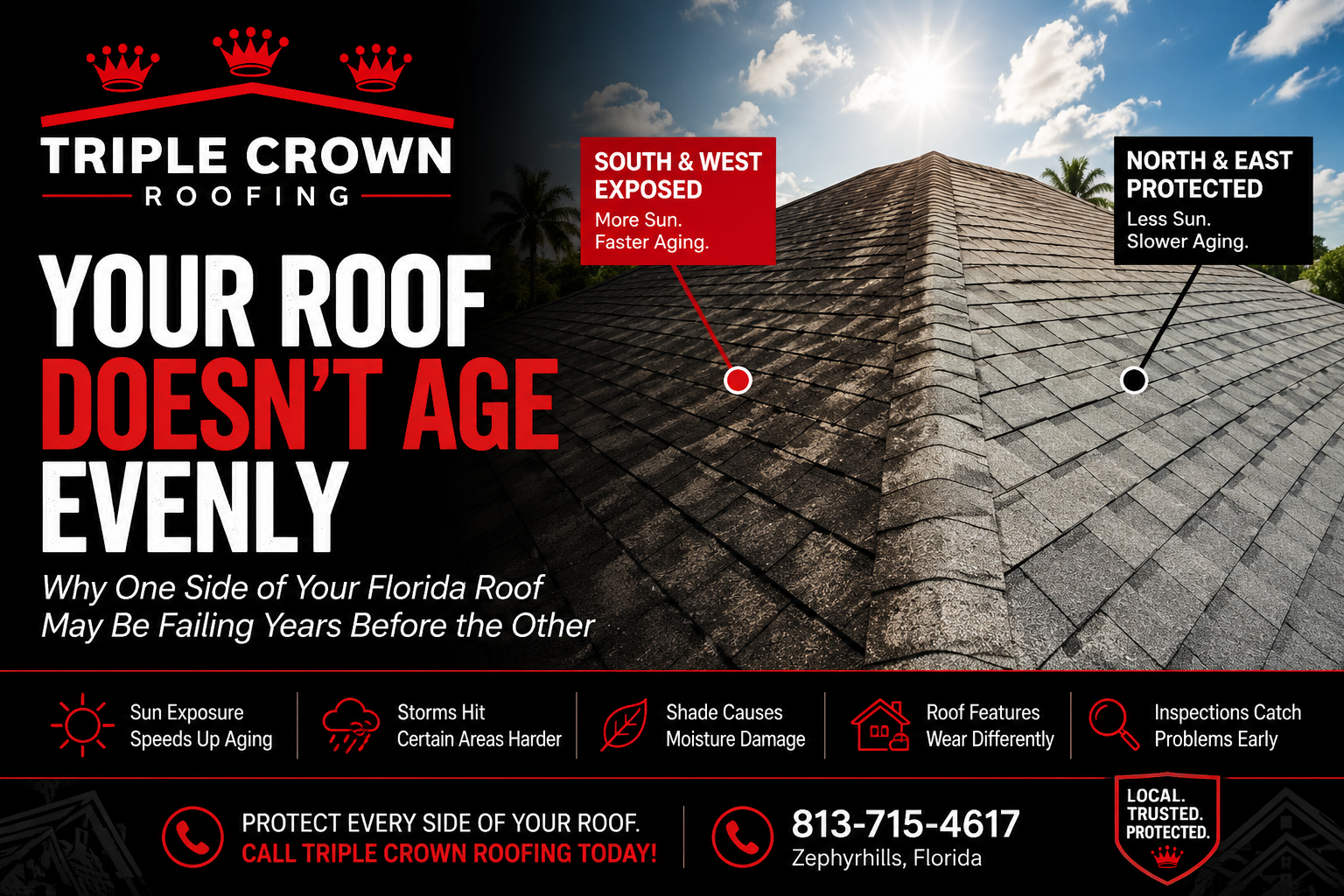
Many Florida homeowners are surprised to learn their roof may be nearing the end of its expected lifespan.
Different roofing materials have different life expectancies.
Factors affecting roof longevity include:
- Florida's intense UV exposure
- Heat
- Humidity
- Storm activity
- Ventilation quality
- Installation quality
Knowing the approximate age and condition of your roof can help you make informed decisions before severe weather arrives.
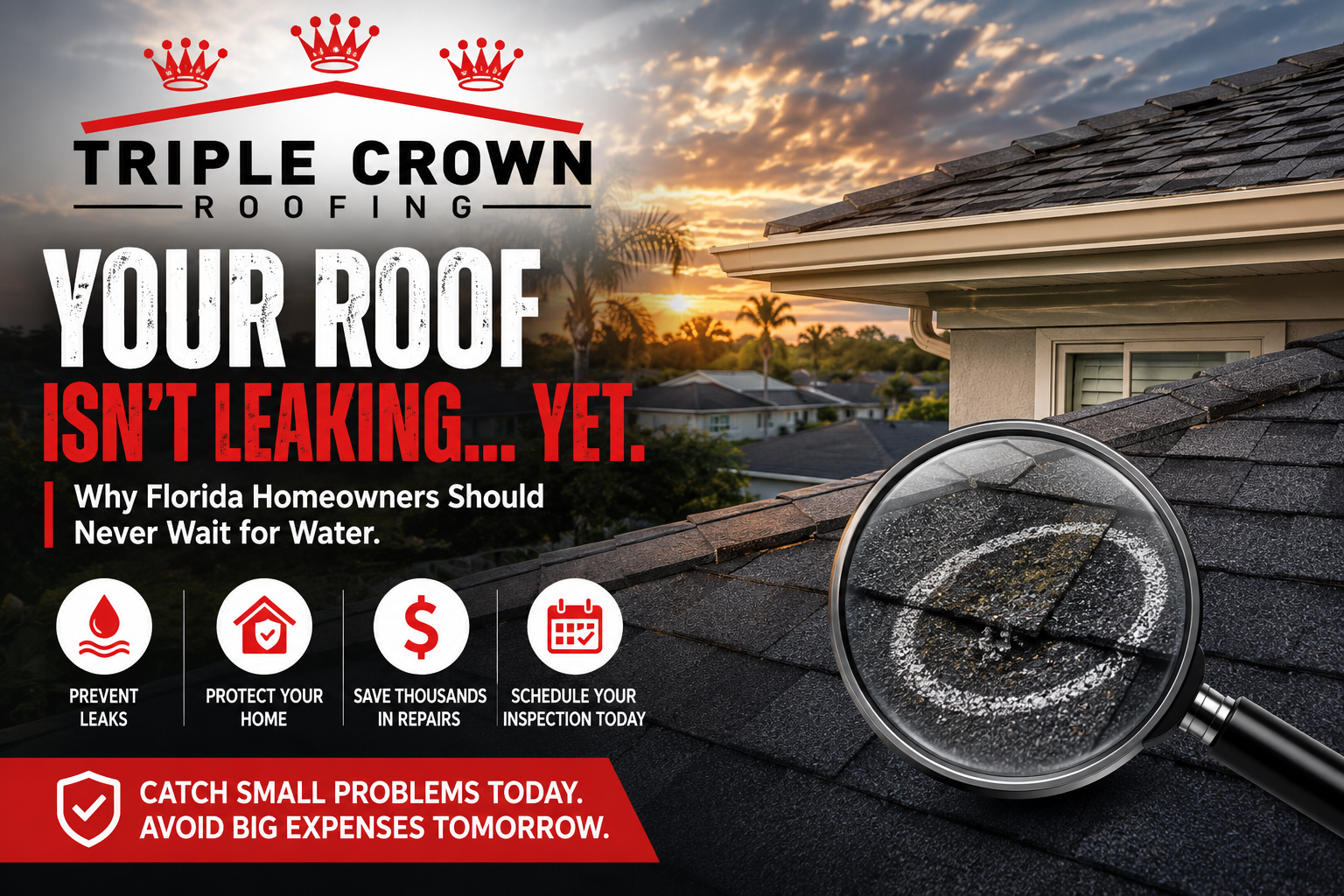
9. Schedule a Professional Roof Inspection
Even experienced homeowners can miss developing roofing issues.
A professional inspection can identify:
- Loose shingles
- Compromised flashing
- Storm damage
- Ventilation concerns
- Hidden moisture issues
Finding and correcting small problems before hurricane season often costs far less than emergency repairs afterward.
10. Review Your Insurance Documentation
While not technically part of the roof itself, hurricane season is a good time to:
- Review your homeowner's insurance policy
- Understand your hurricane deductible
- Document your roof's current condition with photos
- Save inspection records and maintenance receipts
Having proper documentation can be invaluable if a storm causes damage later.
Don't Wait Until a Storm Is Named
One of the most common mistakes Florida homeowners make is waiting until a hurricane enters the forecast before thinking about their roof.
By then, roofing contractors become overwhelmed, supplies become limited, and scheduling repairs can be difficult.
A little preparation today can help provide peace of mind throughout hurricane season and may reduce the likelihood of unexpected roofing problems when severe weather arrives.
At Triple Crown Roofing, we believe informed homeowners make better decisions. Taking the time to inspect and prepare your roof before hurricane season is one of the smartest investments you can make in protecting your home, your family, and your property.