Triple Crown Roofing: Prepare for Hurricane Season with Metal Roofing
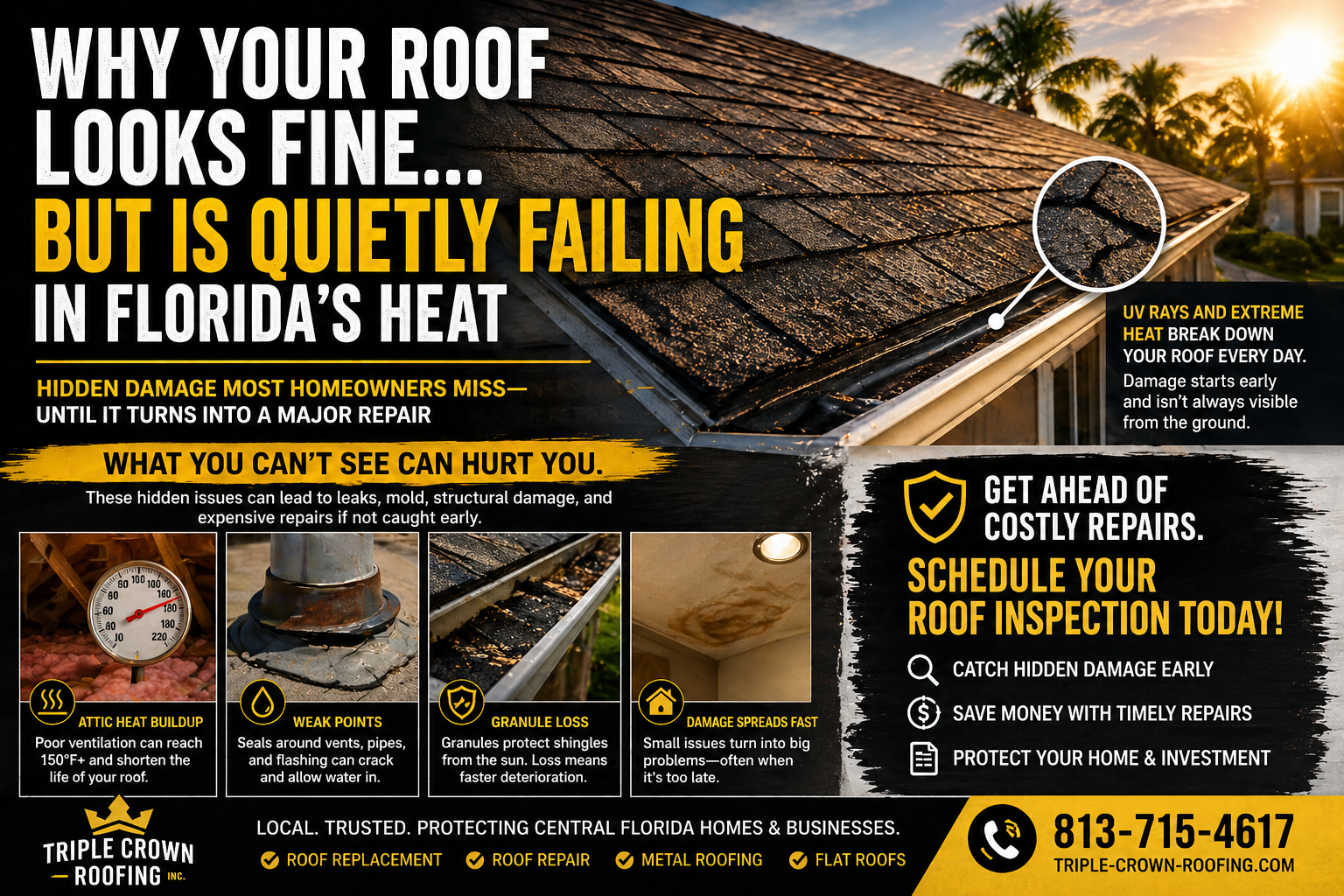
Hidden damage most homeowners miss—until it turns into a major repair
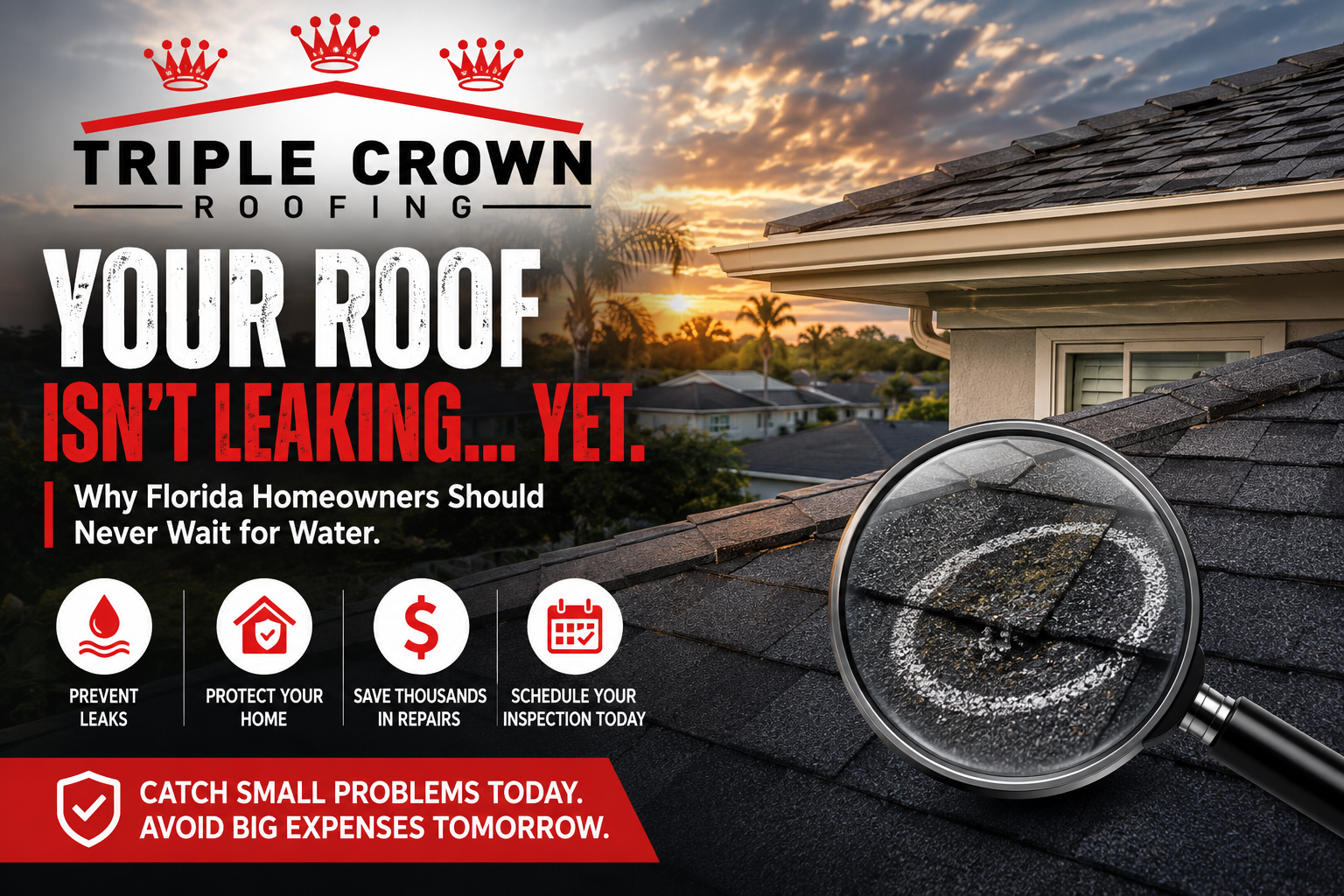
If your roof isn’t leaking, it’s easy to assume everything is fine.
No stains on the ceiling.
No missing shingles.
No obvious problems.
But here in Florida… that assumption can cost you thousands.
The truth is, your roof can look perfectly normal from the ground while slowly breaking down underneath—especially in the brutal heat and humidity we deal with year-round.
Let’s break down what’s really happening up there.
☀️ Florida Heat Is Constantly Attacking Your Roof
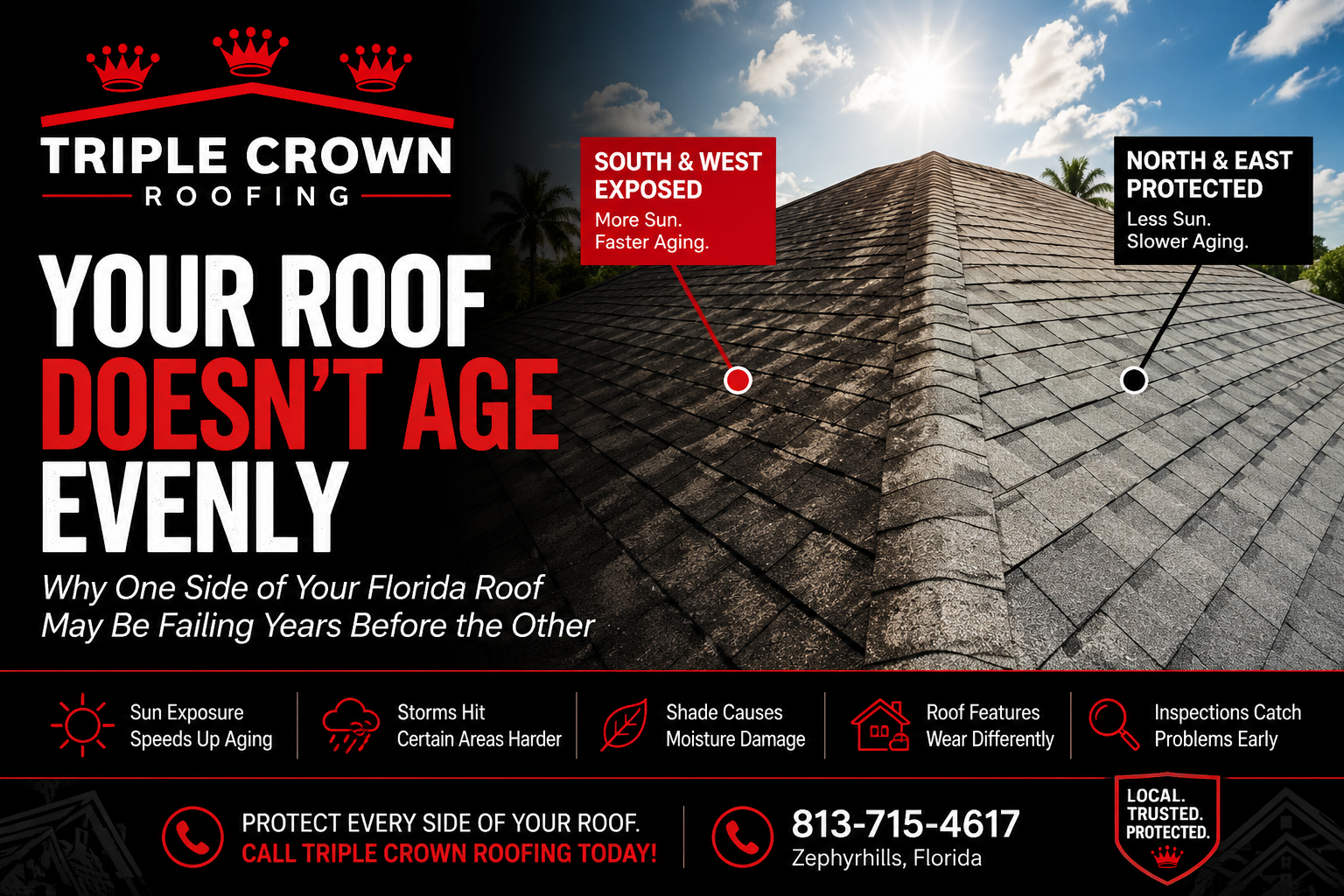
Florida sun isn’t just “hot”—it’s relentless.
Day after day, your roof absorbs intense UV radiation and extreme temperatures. Over time, that leads to:
- Shingle deterioration (drying, cracking, curling)
- Seal breakdown around vents and flashing
- Loss of protective granules on shingles
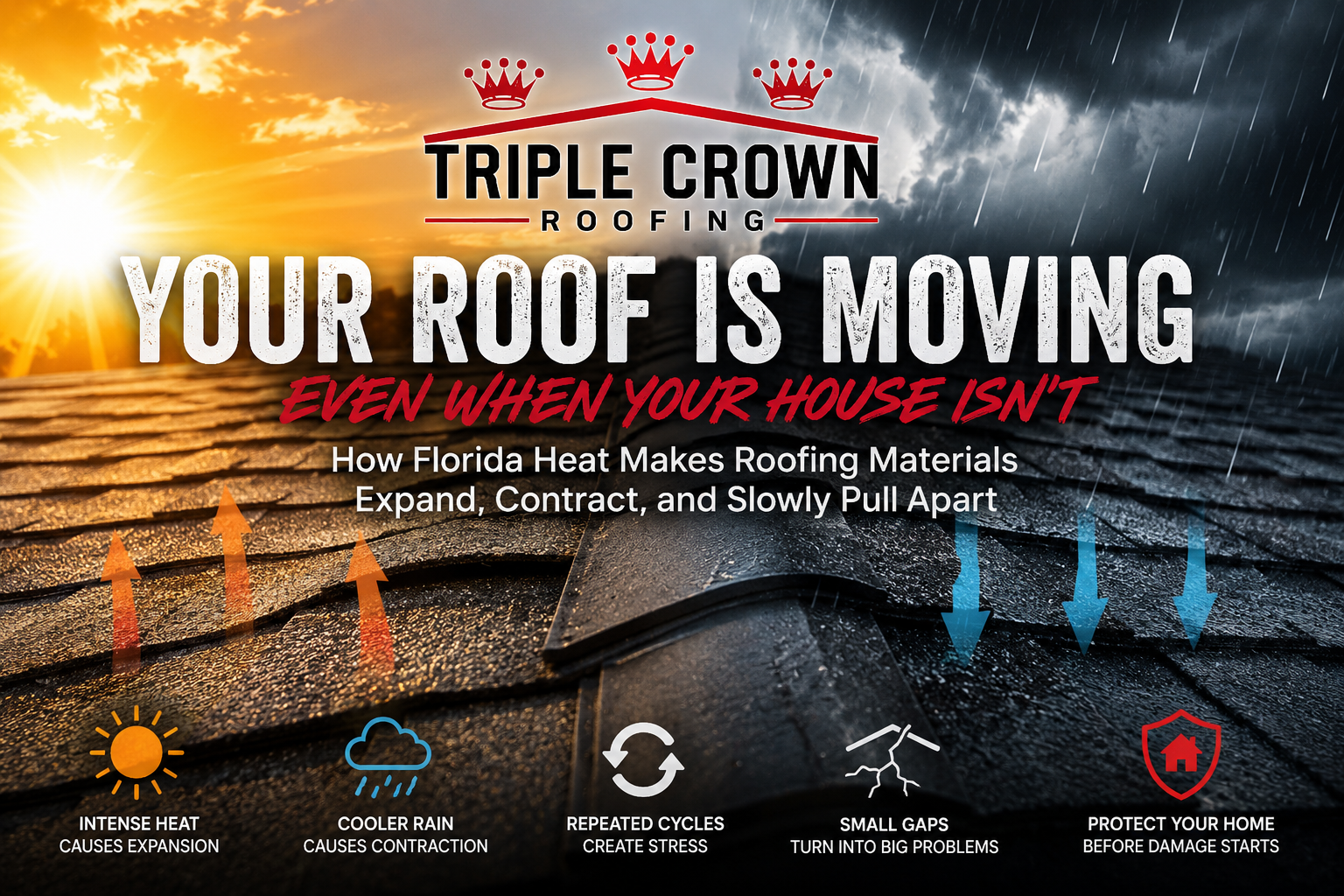
- Thermal expansion and contraction (materials constantly expanding and shrinking)
And here’s the kicker…
👉 Most of this damage starts long before you ever see a leak.
🔥 Your Attic Might Be Cooking Your Roof From Below
One of the biggest silent killers of roofs in Florida?
Poor ventilation.
When your attic can’t release heat properly, temperatures can climb well over 130–150°F.
That heat doesn’t just sit there—it pushes upward into your roof system, causing:
- Warped decking
- Premature shingle failure
- Moisture buildup and mold risk
- Higher energy bills (your AC is fighting a losing battle)
👉 So even if your roof looks fine outside… it could be failing from the inside out.
🌧️ Small Weak Points Turn Into Big Problems Fast
Your roof is only as strong as its weakest point.
And in Florida, those weak points get stressed daily:
- Flashing around chimneys and vents
- Seals around pipe penetrations
- Nail pops and loosened fasteners
- Underlayment wear you can’t see
At first, it’s minor.
Then one heavy storm hits…
And suddenly you’re dealing with water damage, insulation issues, or even structural problems.
🧠 “But It Looks Fine…” Is the Most Expensive Mistake
This is the trap most homeowners fall into.
From the ground, your roof might:
- Look uniform
- Have no visible missing shingles
- Show no obvious sagging
But that doesn’t mean it’s healthy.
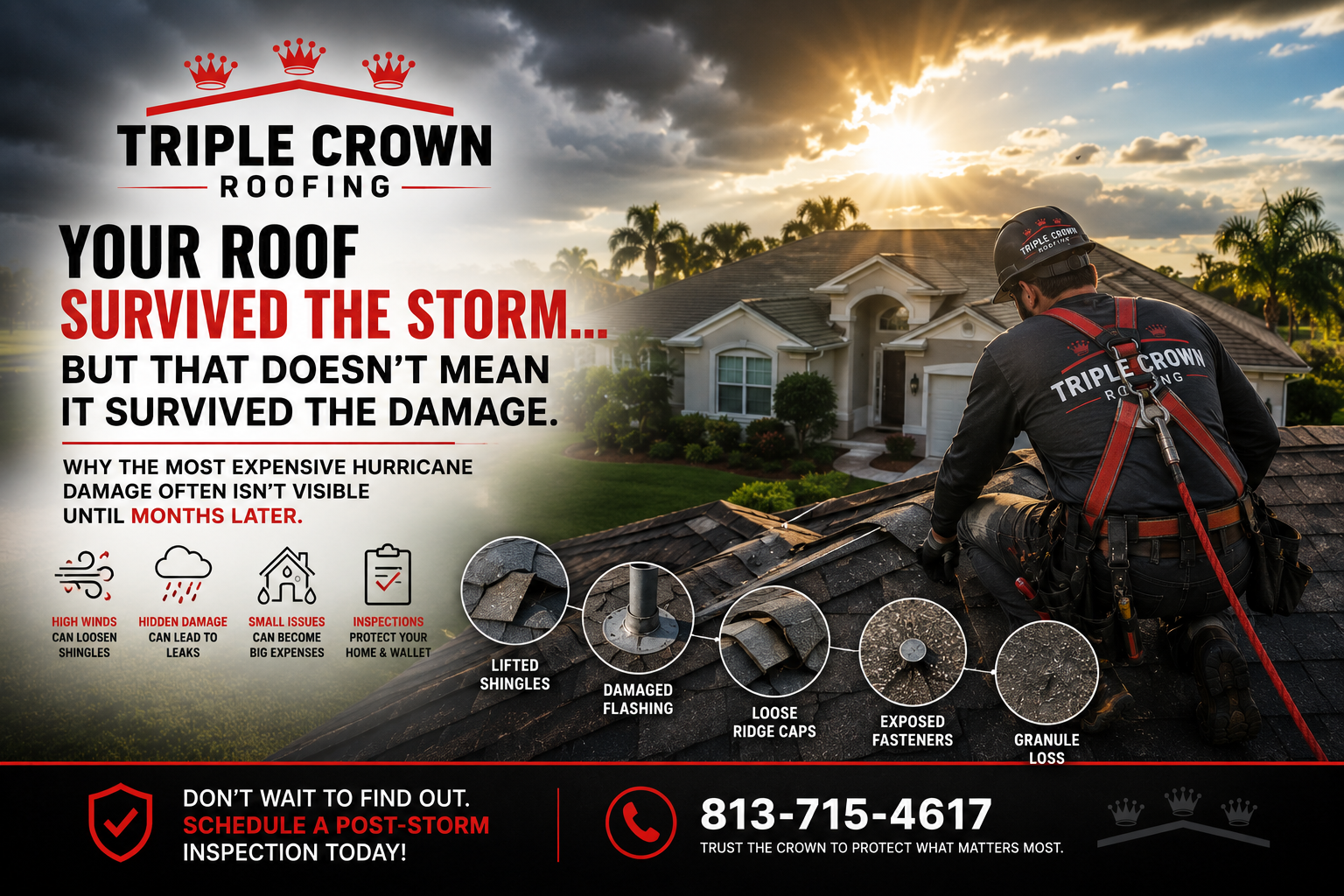
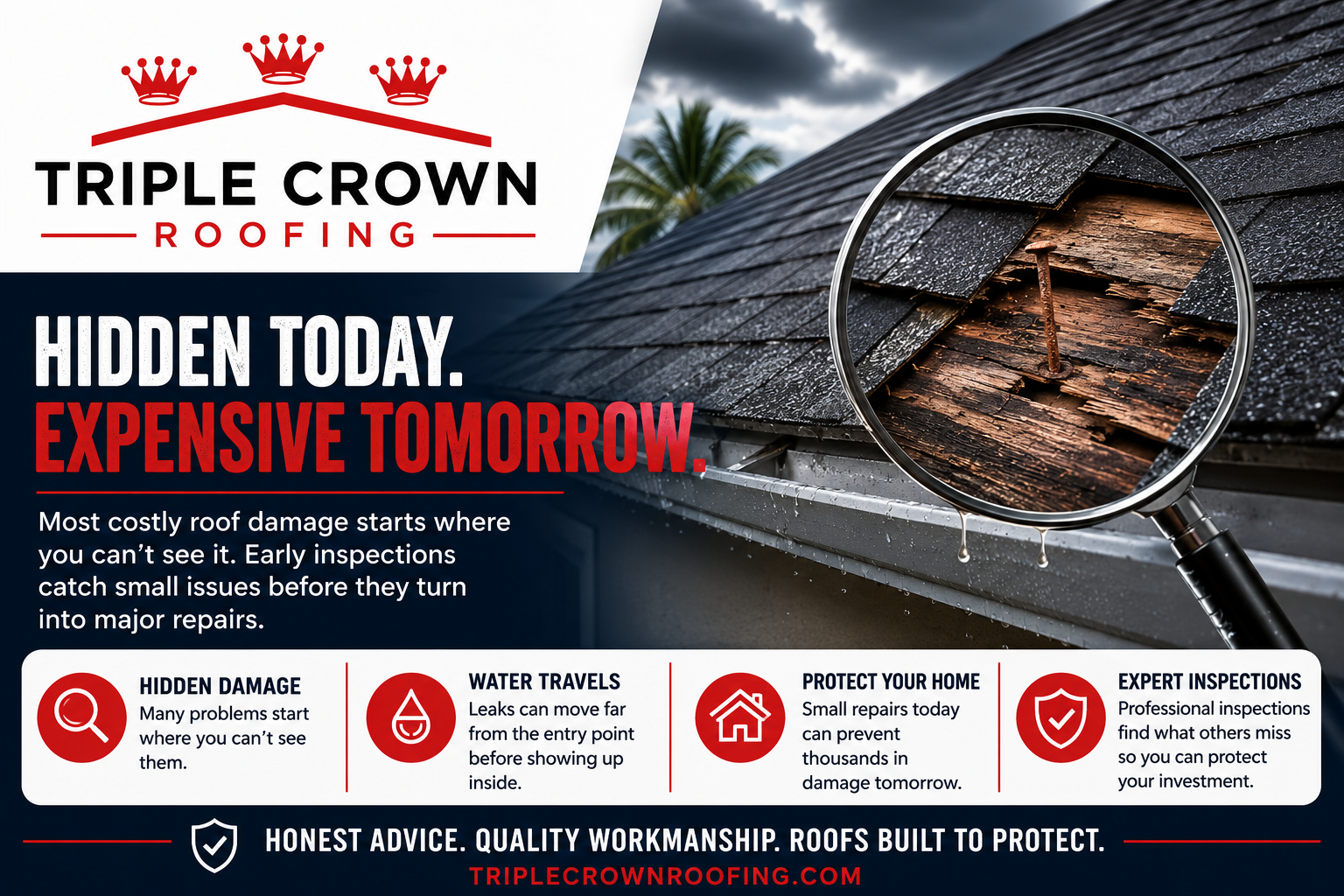
Roof damage in Florida is often gradual and invisible until it reaches a tipping point.
And once it does?
💸 Repairs get expensive fast
💸 Insurance claims get complicated
💸 Damage spreads beyond the roof
⚠️ Early Warning Signs You Shouldn’t Ignore
Even without leaks, your roof may already be in trouble if you notice:
- Rising energy bills for no clear reason
- Hot spots or uneven cooling inside your home
- Granules collecting in gutters
- Slight discoloration or dark streaks
- A roof that’s 10–15+ years old
👉 These are all signals your roof is under stress.
🛠️ What Smart Florida Homeowners Do Instead
They don’t wait for a leak.
They get ahead of the problem.
A professional roof inspection can catch:
- Early-stage damage
- Ventilation issues
- Weak points before failure
- Signs of aging that aren’t visible from the ground
And that gives you options:
✔ Simple repairs instead of full replacement
✔ Better timing (not emergency pricing)
✔ Documentation for insurance if needed
🏆 Protect Your Home Before the Damage Shows Up
At Triple Crown Roofing, Inc., we’ve seen it all—roofs that “looked fine” right up until they weren’t.
Florida’s climate is tough on roofing systems. The key is catching problems early, not reacting late.
👉 If it’s been a while since your roof was checked, now is the time.
📞 Schedule Your Roof Inspection Today
Don’t wait for water to start dripping from your ceiling.
Let’s take a look now—while the problem is still small.
Call 813-715-4617 or visit
👉
https://www.triple-crown-roofing.com
✔ Honest assessments
✔ No pressure
✔ Real solutions that last